
What a good containment layout prevents
Cluttered cable routes
Tray and basket systems keep plant wiring supported and more organised.
Awkward future additions
We allow for growth where the route and space make that practical.
Poor maintenance access
Containment is planned around structures, services and working clearances.
Support and organise cables across the site
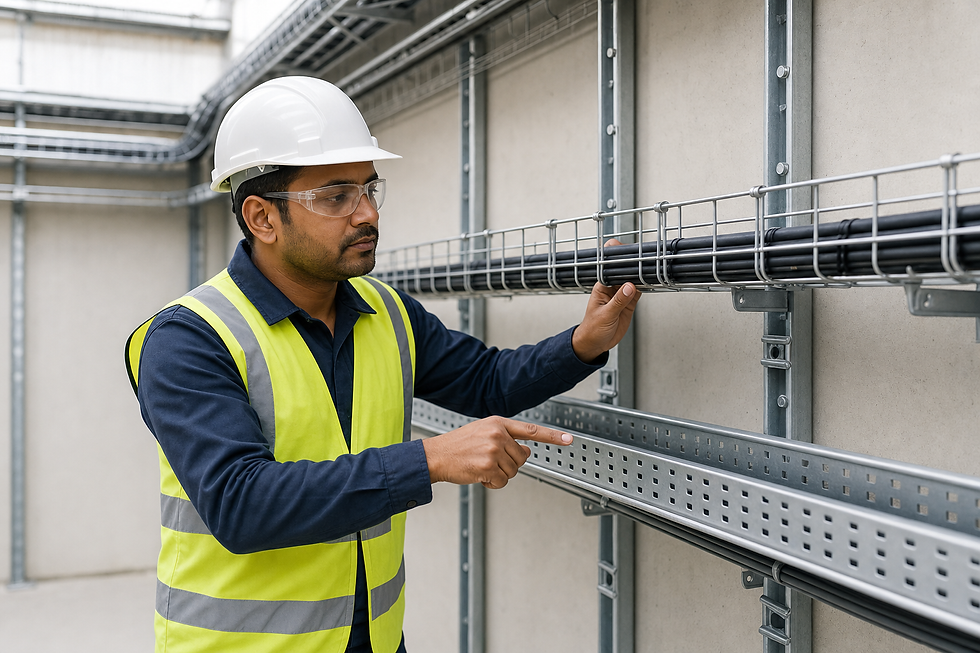
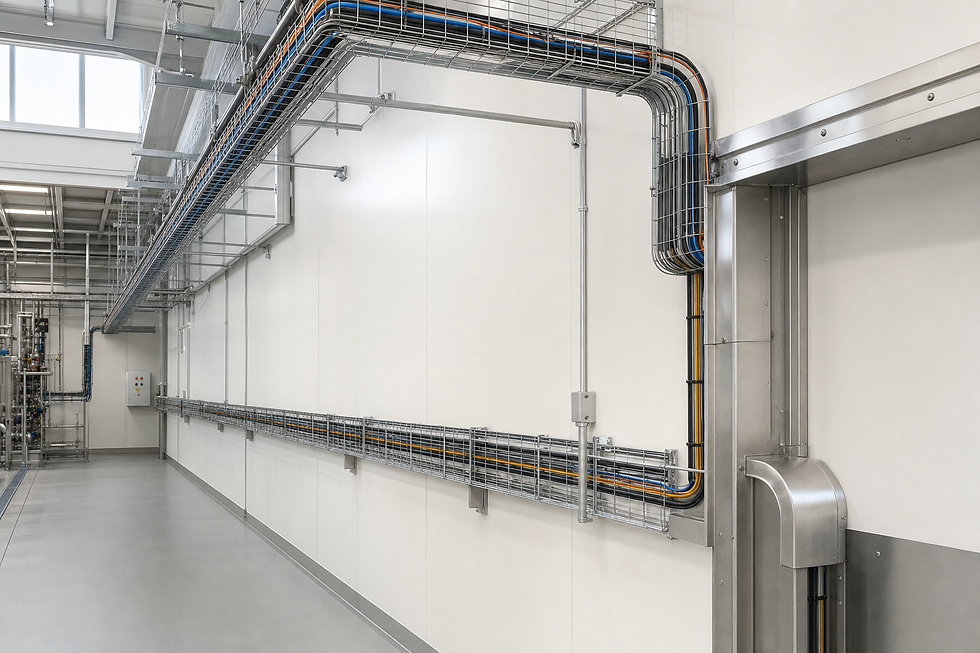
Cable tray and basket systems do a simple but important job on industrial premises. They support, protect and organise the cable routes that feed machinery, controls and site services, making it easier to keep runs clear and maintainable. The right format depends on the route and the duty. Solid or perforated tray can suit some runs better, while open basket systems can improve ventilation, access and flexibility elsewhere. We plan containment with the actual cable types, route shape and working environment in mind, rather than treating every plant area as if one method must suit the lot.
Set out for access, spacing and later additions
Industrial containment needs to work around machinery, structures, other services and the access needed for maintenance once the job is done. We plan changes in level and direction, material choice, support spacing, cable segregation and bend requirements as part of the layout. Where the environment or cleaning regime calls for it, stainless steel can be the sensible choice. Just as important, we allow for future additions where possible. That means the route is not only tidy on handover day, but still useful when the site grows or changes later on.
Frequently asked questions
How do you decide between tray and basket systems?
It depends on the route, the cables being supported, ventilation needs, access requirements and the conditions in the area. Tray and basket both have their place, and the right choice usually comes from the practical demands of the run rather than habit.
Can containment be planned around existing machinery?
Yes. Industrial sites rarely present a nice empty wall and a clear afternoon. We can survey the route around machinery, structures and other services so the containment supports the cables without creating new access problems for operation or maintenance.
When is stainless steel containment a good choice?
Stainless steel can be appropriate where the environment, cleaning regime or general site conditions make it the better material. The key is choosing containment that suits the duty and keeps the route dependable over time, not simply fitting what is easiest to source.