What good conveyor electrics help prevent
Poor line coordination
We consider upstream and downstream equipment so sections work in sequence.
Blocked maintenance access
Cable routes are planned to keep space for operation and servicing.
Unproven stop functions
Testing covers sensors, interlocks and stop circuits before use in production.
Conveyor electrics that support the whole flow
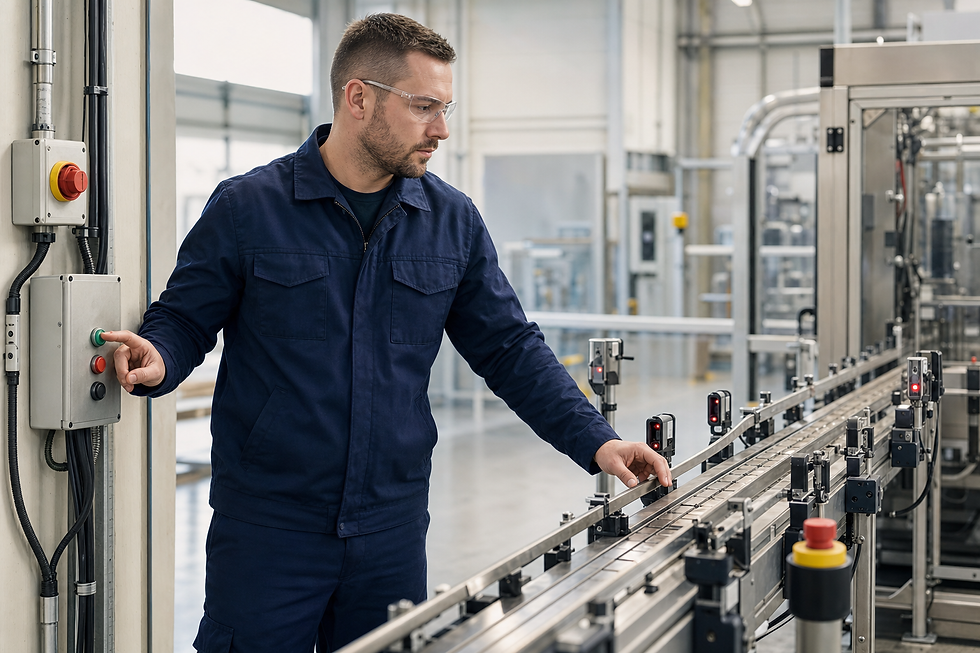
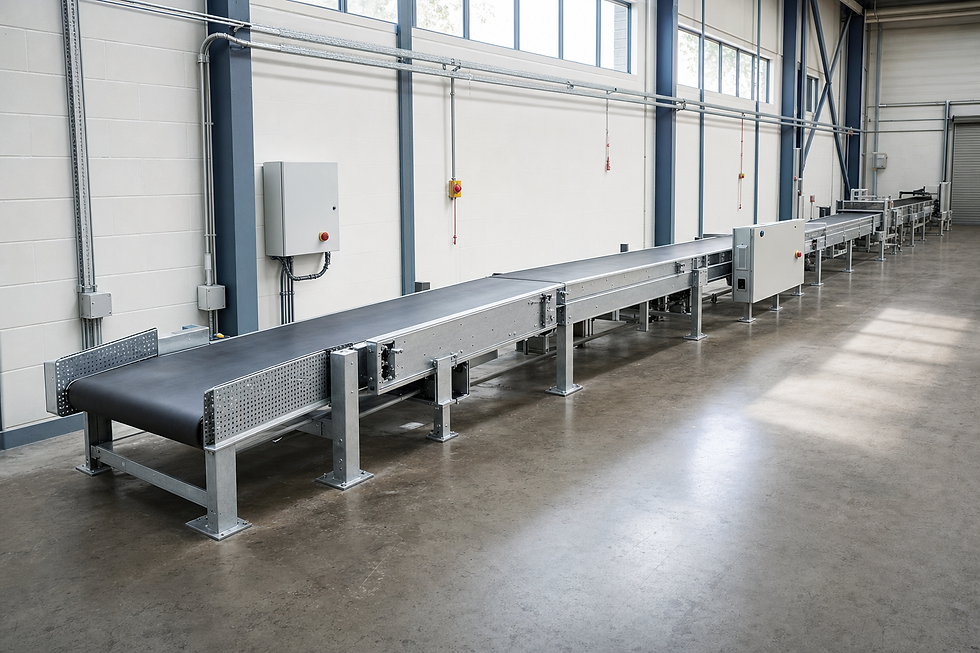
A conveyor may look simple enough until one section starts at the wrong time, a sensor is missed or an emergency stop proves it was only mostly connected. We carry out conveyor electrical installation work covering motor supplies, drives, local isolation, sensors, control stations and emergency-stop circuits. Just as important, we look at how each section links to the machinery before and after it so the intended product or material flow is supported properly. That joined-up view matters on new installations, line extensions and alterations, because conveyors rarely work in glorious isolation from the rest of the plant.
Routes, access and testing planned in order
Power and control cabling along a conveyor needs careful route planning so operation and maintenance access are not blocked by the very cables meant to make the system run. We plan those routes, make the connections, then carry out staged testing of rotation, sensors, stop functions, interlocks and the operating sequence before production use. That step-by-step approach helps catch issues while they are still easy to correct, rather than after product is already meant to be moving and everyone nearby has started checking the obvious button again.
Frequently asked questions
Can you wire conveyors as part of a wider line project?
Yes. Conveyor electrics often sit within a larger production sequence, so we can wire them as part of broader line work where the conveyors need to communicate and operate properly with upstream and downstream machinery.
What is checked before a conveyor goes into service?
We can carry out staged testing of motor rotation, sensors, local controls, stop functions, interlocks and the intended operating sequence. The aim is to prove the conveyor responds correctly before it is relied on during production.
Do you handle conveyor alterations after equipment changes?
Yes. If conveyors are extended, repositioned or altered after changes elsewhere on the line, we can review the electrical requirements, routes and control links needed so the updated system fits the new layout and sequence properly.